Kawaii Animal Duck Illustrations: A Complete Design Asset
There's a distinct charm in the way a kawaii design can shift the entire mood of a project. Kawaii Animal Duck Illustrations capture this perfectly, offering a blend of innocence and playful energy. These aren't just simple drawings; they are carefully crafted characters that bring a specific, heartwarming personality to any surface they grace. Their rounded forms, expressive eyes, and soft color palettes evoke a sense of comfort and joy, making them instantly appealing to a wide audience. This particular set of illustrations is designed with versatility at its core, ready to be adapted for everything from professional branding to personal crafting projects.
Understanding the Visual Appeal and Character
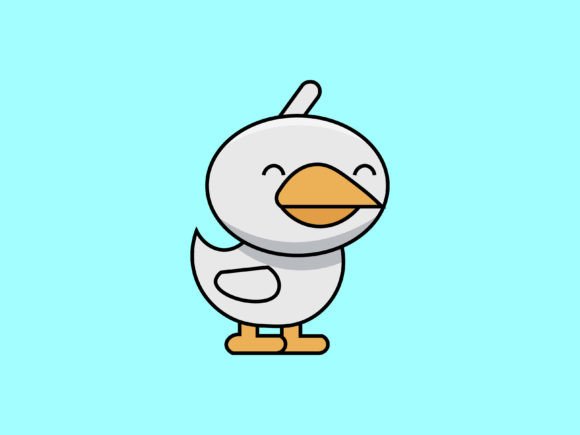
The visual language of these kawaii ducks is deliberate and effective. Each illustration typically features exaggerated, rounded body shapes, large and shiny eyes that convey curiosity or happiness, and minimal yet expressive details like small wings or a cheerful beak. The style avoids complex linework, favoring clean, smooth edges that reproduce beautifully at any scale. The color schemes are often soft pastels or bright, cheerful primary colors, though the provided vector files allow for complete customization to fit any brand's existing palette. This design approach ensures the characters feel friendly and non-threatening, which is crucial for applications targeting children or for brands aiming to project approachability and warmth.
Beyond the aesthetic, these illustrations carry a personality. They can appear curious, playful, sleepy, or excited, depending on the specific pose and expression chosen. This emotional range is a powerful tool. A sleeping duck on a pillowcase promotes relaxation, while a duck wearing a tiny hat and waving could be the perfect mascot for a children's bookstore or a spring-themed marketing campaign. The simplicity of the style is its strength, allowing the viewer to project their own feelings onto the character, creating a stronger personal connection.
Practical Applications Across Media
The true value of a design asset like this lies in its adaptability. The included file formats—AI, EPS, high-resolution JPG, and PNG—ensure seamless integration into virtually any workflow. For a graphic designer working on a brand identity, these illustrations can become the cornerstone of a logo, the hero image on a website, or the recurring motif in packaging design. Imagine a local bakery using a friendly duck as its mascot, featured on menus, signage, and social media posts. This consistency builds strong brand recognition and tells a cohesive visual story.
For entrepreneurs and small business owners, the applications are immediately commercial. These designs are ready for print-on-demand products: think adorable patterns for totebags, all-over prints for t-shirts, or charming artwork for phone cases and pillows. The kawaii aesthetic has a proven market in stationery, making these illustrations ideal for designing notebooks, planners, and children's books. A publisher could use them to create engaging activity books or early reader stories where the duck characters guide the narrative. The provided EPS and AI files are particularly valuable here, as they allow for scaling to any size without loss of quality—essential for large-format prints like posters or wall art.
Content creators and marketers can leverage the appeal of these ducks to boost engagement. Using a kawaii duck illustration as a mascot in social media graphics can make a brand's feed feel more personable and memorable. They can be incorporated into email newsletter headers, blog post featured images, or even as animated stickers for Instagram Stories. For crafters and hobbyists, the PNG files with transparent backgrounds are perfect for DIY projects, such as custom stickers, scrapbooking elements, or vinyl decals for mugs and laptops. The possibilities extend to digital products as well, where the illustrations can enhance the look of digital planners, printable art, or educational materials.
Integrating the Illustrations into Your Design Process
When incorporating these kawaii ducks into a project, context is everything. Consider your target audience and the message you want to convey. For a children's book, the illustrations can be used directly, perhaps with added speech bubbles or simple backgrounds. For a more sophisticated brand, you might use a single duck icon as part of a logo or as a subtle watermark pattern on stationery. The key is to let the character support your message, not overwhelm it.
Font pairing is another critical consideration. To maintain readability and visual harmony, pair the playful nature of the illustrations with a clean, modern typeface. A simple sans-serif font for body text ensures clarity, while a complementary display font for headlines can echo the fun personality without competing for attention. Avoid overly ornate or script fonts in close proximity, as this can create visual clutter. The goal is a balanced hierarchy where the illustration and typography work together to guide the viewer's eye.
Before finalizing any design, test the illustrations in their intended environment. View a t-shirt mockup at actual size to check for visual impact. Print a notebook cover at home to assess color reproduction. Share social media graphics on a mobile device to see how they appear on a small screen. This practical testing phase is crucial for catching issues with scale, color balance, or compositional flow that aren't apparent on a computer monitor. Remember, the included files give you full creative control—recolor the ducks to match your brand, rearrange elements, or combine them with other design assets to create something truly unique. By thinking of these illustrations as a flexible toolkit rather than a fixed image, you unlock their full potential to elevate your creative projects.